Master Data Science, AI & Machine Learning: Shape the Intelligence of Tomorrow
Comprehensive Training in Artificial Intelligence, Deep Learning, and Generative AI
We are living through the Fourth Industrial Revolution. Artificial Intelligence (AI) and Machine Learning (ML) are no longer sci-fi concepts; they are the engines driving modern innovation—from autonomous vehicles and personalized medicine to intelligent chatbots and predictive analytics. At Tulsi Academy, our Data Science & AI curriculum is designed to transform you into a pioneer of this technology.
Whether you are a beginner fascinated by the potential of ChatGPT or a developer looking to master Deep Learning algorithms, our courses offer a structured path to mastering the most lucrative and transformative skills of the 21st century.
This module provides the “Big Picture” of AI, distinguishing between the broad concept of AI and the specific subset of Machine Learning that enables computers to learn from data.
Understanding the AI Ecosystem:
Define the relationship between Artificial Intelligence, Machine Learning, and Deep Learning.
Explore the history and evolution of AI, from the Turing Test to modern generative models.
Understand the impact of AI on various industries: Healthcare, Finance, Retail, and Transportation.
Types of Learning:
Differentiate between Supervised Learning (learning with labeled data), Unsupervised Learning (finding patterns in unlabeled data), and Reinforcement Learning (learning through trial and error).
Discuss real-world use cases for each type, such as spam filters, recommendation engines, and robotics.
Ethics in AI:
Address critical ethical considerations, including algorithmic bias, data privacy, and the future of human-AI collaboration.
Artificial Intelligence Fundamentals
Before diving into complex algorithms, one must understand the foundational logic and problem-solving techniques that underpin AI systems.
Problem Solving & Search:
Learn Search Algorithms (BFS, DFS, A*) used in pathfinding and game playing (e.g., chess bots).
Understand Heuristics and how to make informed decisions when complete information is unavailable.
Knowledge Representation:
Study how to represent human knowledge in a format that computers can process (Logic, Rules, Semantic Networks).
Introduction to Fuzzy Logic and Probability Theory for handling uncertainty.
Introduction to Robotics & Agents:
Learn the architecture of an Intelligent Agent—anything that perceives its environment and takes actions to achieve a goal.
Basics of sensors, actuators, and perception in robotic systems.
Machine Learning with Python
Python is the lingua franca of Data Science. This module focuses on the practical application of ML algorithms using Python’s powerful libraries.
Data Manipulation & Analysis:
Master NumPy for numerical computing and Pandas for data manipulation and cleaning.
Learn Matplotlib and Seaborn for data visualization and exploratory data analysis (EDA).
Supervised Learning Algorithms:
Implement Linear Regression and Logistic Regression for prediction.
Master Decision Trees and Random Forests for classification.
Learn Support Vector Machines (SVM) and K-Nearest Neighbors (KNN).
Unsupervised Learning:
Implement K-Means Clustering to group unlabelled data.
Learn Dimensionality Reduction techniques like PCA (Principal Component Analysis).
Model Evaluation:
Understand metrics: Accuracy, Precision, Recall, F1-Score, and ROC-AUC.
Learn techniques to prevent overfitting, such as Cross-Validation and Regularization.
Deep Learning
Deep Learning mimics the human brain’s neural networks to solve complex problems that traditional ML cannot handle, such as image recognition and natural language understanding.
Neural Network Foundations:
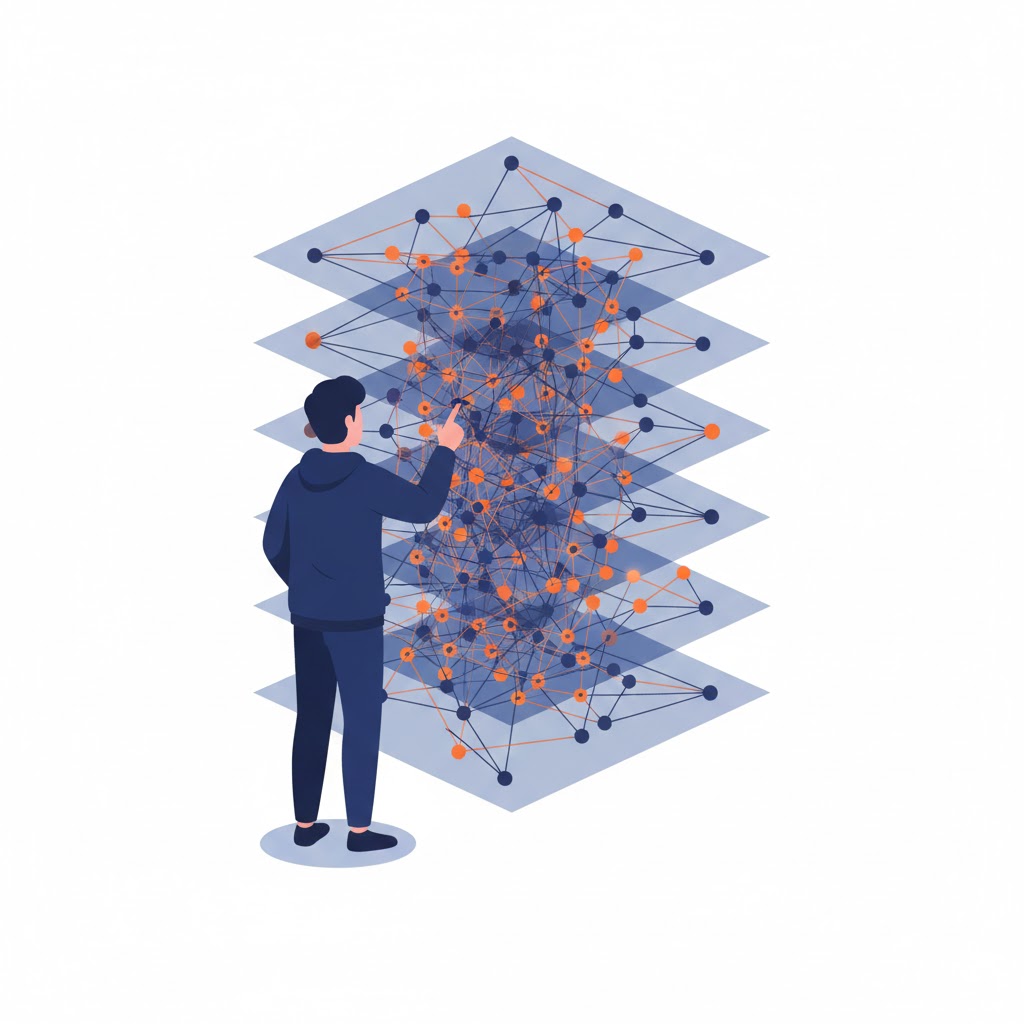
Understand the architecture of Artificial Neural Networks (ANN): Input, Hidden, and Output layers.
Learn about Activation Functions (ReLU, Sigmoid, Tanh) and Backpropagation for training networks.
Frameworks Implementation:
Gain hands-on experience with TensorFlow and Keras or PyTorch.
Build, train, and optimize deep learning models.
Advanced Architectures:
CNNs (Convolutional Neural Networks): Specialized for image processing and grid-like data.
RNNs (Recurrent Neural Networks) & LSTMs: Specialized for sequential data like time series and stock prices.
Natural Language Processing (NLP)
NLP bridges the gap between human communication and computer understanding. It is the technology behind Siri, Google Translate, and ChatGPT.
Text Preprocessing:
Learn techniques for cleaning text: Tokenization, Stemming, Lemmatization, and Stop-word removal.
Convert text into numerical vectors using Bag of Words and TF-IDF.
Advanced NLP Models:
Understand Word Embeddings (Word2Vec, GloVe) to capture semantic meaning.
Master Transformers (the ‘T’ in ChatGPT) and the architecture of BERT and GPT models.
Applications:
Build Sentiment Analysis models to determine emotion in text.
Create Chatbots and Named Entity Recognition (NER) systems.
Perform Text Summarization and Machine Translation.
Computer Vision
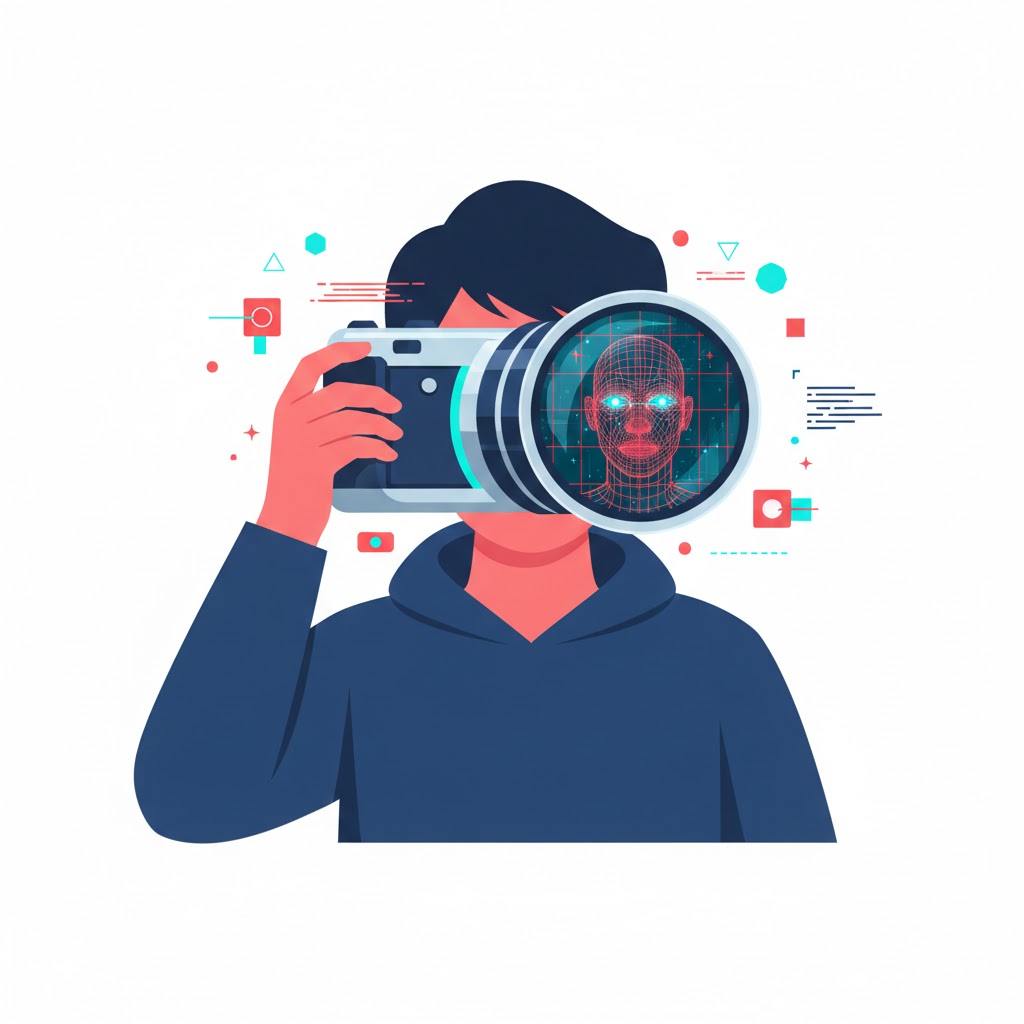
Computer Vision enables machines to “see” and interpret the visual world. It is the core technology behind self-driving cars and facial recognition.
Image Processing Basics:
Learn how computers read images (pixels, channels, color spaces).
Perform operations like edge detection, image filtering, and geometric transformations.
Object Detection & Classification:
Train models to classify images (e.g., Cat vs. Dog).
Implement Object Detection algorithms like YOLO (You Only Look Once) to identify and locate multiple objects in an image in real-time.
Facial Recognition & Analysis:
Build systems for face detection, landmark detection, and emotion recognition.
Explore Transfer Learning—using pre-trained models (like VGG16 or ResNet) to solve new problems with less data.
Generative AI (ChatGPT, AI Tools)
This module focuses on the cutting edge of AI: Generative models that can create new content, including text, images, code, and audio.
Large Language Models (LLMs):
Understand the architecture behind GPT-4 and other large language models.
Learn Prompt Engineering: crafting effective inputs to get high-quality outputs from ChatGPT and similar tools.
API Integration & Automation:
Learn to use the OpenAI API to integrate ChatGPT’s capabilities into custom applications.
Build AI-powered assistants that can write code, draft emails, or analyze data.
Generative Art & Media:
Explore tools like Midjourney, DALL-E, and Stable Diffusion to generate images from text descriptions.
Understand the ethical implications of deepfakes and copyright in generative AI.
Building AI Agents:
Introduction to frameworks like LangChain for building chains of reasoning and connecting LLMs to external data sources (PDFs, Databases).
Why Choose Tulsi Academy for AI & Data Science?
Future-Ready Curriculum: Our syllabus is updated quarterly to keep pace with the rapid advancements in Generative AI and Deep Learning.
Capstone Projects: Work on real-world projects such as Stock Price Prediction, Face Recognition Attendance Systems, and Custom Chatbots.
Tool Mastery: Gain proficiency in the industry stack: Python, TensorFlow, PyTorch, OpenAI API, and Hugging Face.
Expert Mentorship: Learn from data scientists and AI researchers who bring industry experience into the classroom.
Unlock the power of data and intelligence. Join Tulsi Academy today.